After school
How to Help Your Child Practice What They Learn at School
Teachers have a whole class to get through the year’s lessons. A little practice at home, most days, is what turns “we did that in class” into “I know how to do that”. Here’s how to make it work for a busy family.

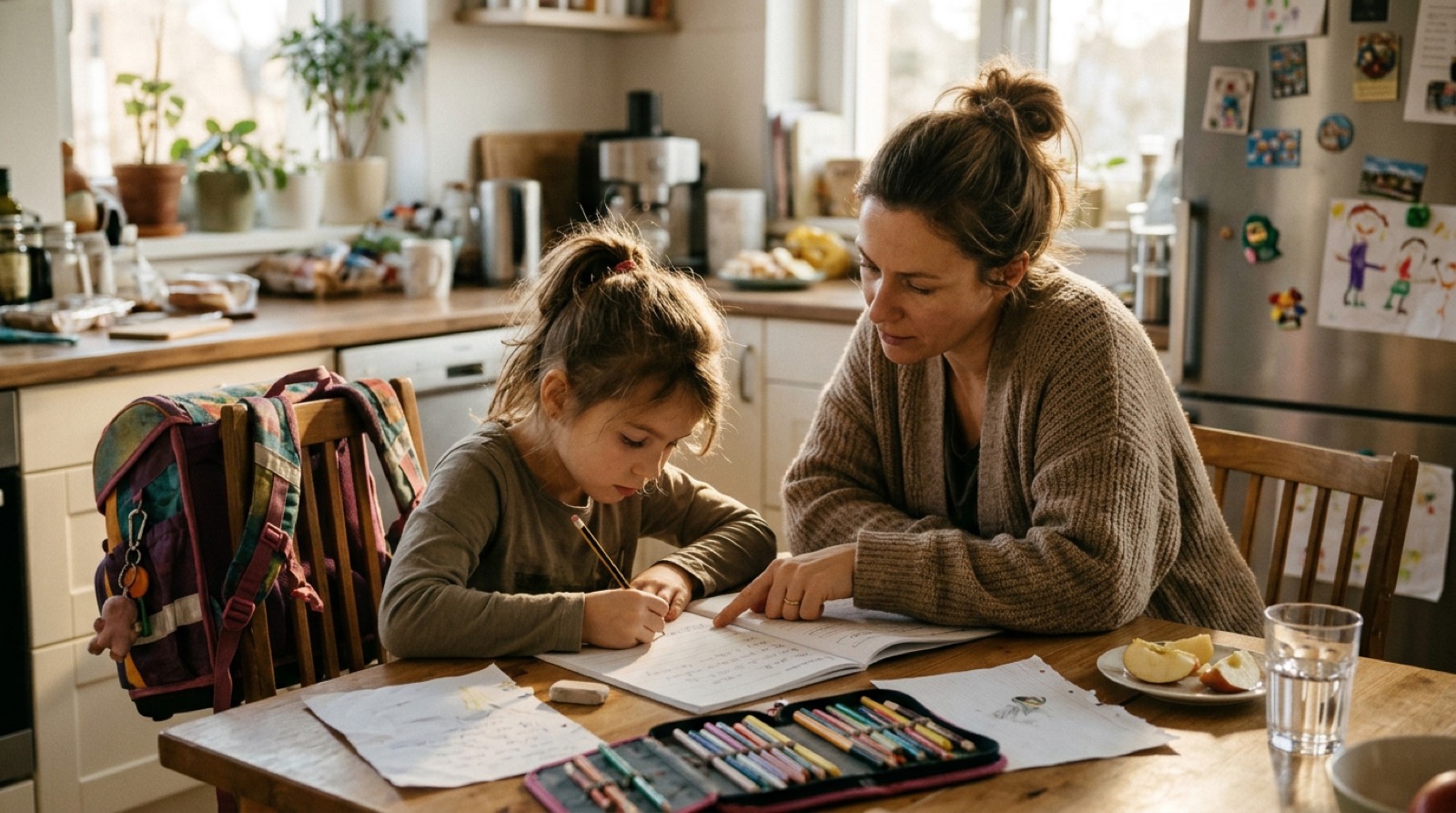
Why does practicing at home help?
Practicing at home gives children the extra turns a class can’t. A new skill might get a lesson or two before the class moves on, and many children need more. Reading and math build like a staircase: a shaky step in Grade 1, like adding within 20 or sounding out words, makes every later step harder.
A few focused minutes at home, on most days, gives your child those extra turns. It doesn’t replace school. It goes hand in hand with it.
How do I find out what my child is learning at school?
Start with what the school already sends: the class newsletter or app, and the worksheets and tests that come home. Then ask the teacher one question: “What’s the one thing that would help most to practice at home?” The grade’s goals, usually Common Core in US schools, tell you what’s coming next.
- Read the class newsletter or app. Many teachers share the week’s topics: a spelling list, a math unit, a phonics sound.
- Look at what comes home. Worksheets and tests show both the topic and where your child got stuck.
- Ask the teacher one question: “What’s the one thing that would help most to practice at home?” Teachers love this question.
- Know the grade’s goals. Most US schools follow Common Core or standards close to it, so the grade’s list tells you what’s coming.
What should my child practice at home?
Practice reading and math, matched to your child’s age. At 4–5, that’s letter sounds, counting and adding within 5. At 6–7, reading aloud daily and sums within 10, then 20. At 8, longer books and carrying. At 9–10, times tables, fractions and reading for meaning.
| Age | Most worth practicing at home |
|---|---|
| 4–5 | Letter names and sounds, counting objects, comparing groups, adding within 5 |
| 6–7 | Reading aloud every day, sounding out words, sums within 10 then 20, spelling short words |
| 8 | Reading longer books, sums within 20 by heart, adding and subtracting with carrying, telling time |
| 9–10 | Times tables by heart, fractions, reading for meaning, spelling patterns and writing paragraphs |
How long should my child practice each day?
For most children 4–10, 10–20 minutes of focused practice, five days a week, does more than a long session at the weekend. Short and regular wins, because the brain remembers what it meets again and again, on different days. Pick a fixed time, like straight after a snack or before screens.
When it’s the same every day, there’s less arguing about it, and many children start without being asked.
How do I keep practice positive?
Compare your child with their own yesterday, never with classmates. Praise real progress at the end rather than every answer, and show mistakes step by step before trying another one. Stop while it’s still going well, so tomorrow starts on a success. Keep screens, games and treats for after practice, not mixed in.
- Compare with yesterday, not with classmates. “You got 8 right today, you got 6 last time” is the best praise there is.
- Praise real progress at the end, not every answer. Children learn to try for the real thing.
- When they’re wrong, show how, step by step. Then let them try another one.
- Stop while it’s still going well. Ending on a success makes tomorrow easier.
- Lessons first, then fun. Screens, games and treats after practice, not mixed in.
How can I help with practice when I’m tired after work?
You don’t have to plan lessons every evening. A good learning app can carry the daily practice. Look for one that follows your child’s grade, reads questions aloud for young children, explains mistakes step by step, and shows you what was practiced. On the hardest days, reading together at bedtime is plenty.
Quick questions
Should my child do extra practice if they already have homework?
Homework comes first. On light homework days, a few minutes of extra reading or math practice helps most. On heavy days, reading together at bedtime is plenty.
How do I know if my child is behind at school?
Ask the teacher, look at the grade’s goals (Common Core for most US schools), and notice what your child avoids. Avoiding reading aloud or counting on fingers for every sum in Grade 3 are signs a skill needs more practice.
Is it OK to practice things the class hasn’t done yet?
Yes, a little ahead is fine, especially for confident children. Most of the time, though, practicing what was just taught gives the biggest boost.
What if my child refuses to practice?
Make it shorter and keep it at the same time every day, before screens. Start with something they can already do, so the first few minutes feel like a win.