After school
An After-School Routine That Works for Kids 4–10
After school, children are tired, hungry and ready to play. A simple routine, the same every day, takes the arguing out of homework and practice and still leaves time to unwind.

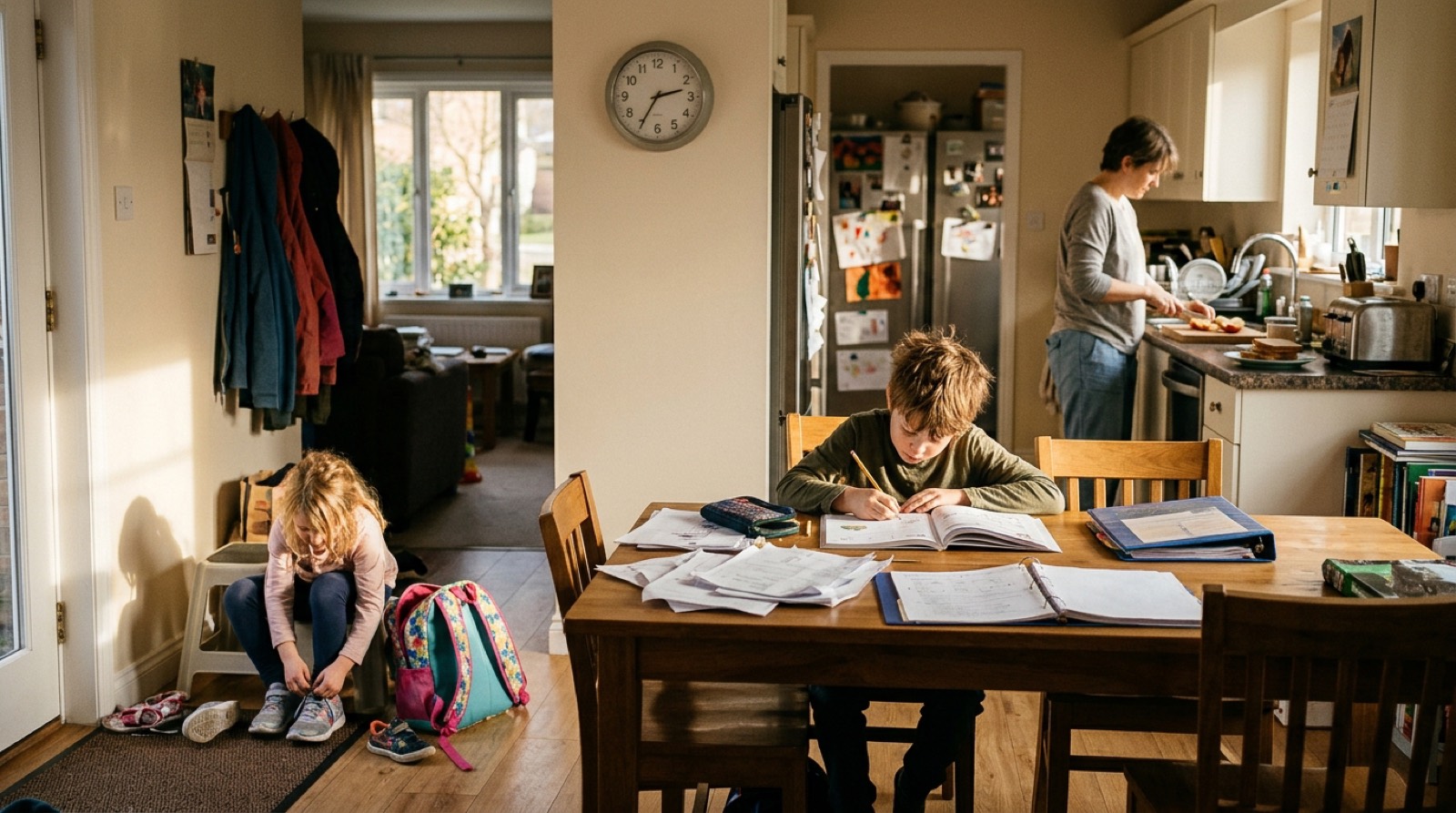
What does a good after-school routine look like?
A good after-school routine for kids 4–10 starts with a snack and some time to move. Then comes homework, 10–20 minutes of reading and math practice, and a small chore. Free time with games or screens comes last, and reading together ends the day at bedtime. The order matters more than the exact times.
| When | What |
|---|---|
| Home | Snack and a chat: “What was the best part of today?” |
| +20 min | Outside time or free play: they need to move first |
| +1 hour | Homework, if there is any |
| Then | A little practice: 10–20 minutes of reading and math |
| Then | A small chore: set the table, tidy toys, pack the school bag |
| After | Free time: games, screens, play |
| Bedtime | Read together |
Adjust it to your family: some children focus best straight away, others after a run outside. What matters is that the order stays the same.
Should kids do homework before screen time?
Yes, for most families. The easiest rule to keep is a simple order: homework and practice first, then screens and games. Children learn the pattern quickly, so you don’t have to negotiate every day. Screens become the thing that comes after the work is done, not something to bargain over.
The American Academy of Pediatrics recommends about an hour a day of high-quality screen time for ages 2–5, and consistent limits that the family sets for older children. Screen time spent on real learning is different from scrolling, but it still counts toward the total, so keep practice short and focused.
Should chores be part of an after-school routine?
Yes. Small daily tasks, like making the bed, packing the school bag or feeding a pet, build the same habits as learning: doing a little every day, and finishing what you start. One short chore after practice fits easily into the afternoon, and ticking it off can be as satisfying as a gold star.
What rewards work for kids’ routines?
The rewards that work best praise effort and progress, not every right answer. Choose real-world treats, like an extra bedtime story or picking the family movie, and let children earn them over a week instead of instantly. Saving up teaches patience, and praising progress teaches children to try for the real thing.
- For effort and progress, not every answer. Praise “you did better than yesterday”.
- Real-world rewards you choose: an extra bedtime story, choosing the family movie, a trip to the park.
- Earned over a week, not instantly. Saving up teaches patience.
Quick questions
Should homework be done right after school?
Not necessarily. Many children focus better after a snack and some time to move. Pick a time and keep it the same each day.
How much extra practice is too much?
If your child dreads it or it eats into play and sleep, it’s too much. For ages 4–10, 10–20 minutes on top of homework is usually right.
How do I stop the daily arguments about homework?
Keep the same order every day, and keep practice short. When screens and games always come after homework and practice, there’s nothing left to negotiate.
What about days with sports or other activities?
Keep the order on the days you’re home. On busy days, a few minutes of practice and reading together at bedtime is enough.